|
GRACE OPC |
grace Orthodox Presbyterian Church in Hanover Park, IllinoisWelcome to the Grace Church website. We are a church that seeks to glorify. God by preaching and practicing the whole Word of God and its message of. salvation through Christ alone in the context of a loving, prayerful, and supportive ... sinners who have been saved by the grace of God ... coming Sunday, and find out about Grace Church. first-hand ...god's Covenants, Covenant of Redemption, Grace, WorksLane Tipton Lectures on the Covenant of Works 2000 Reformation Weekend Series,
Grace OPC, Sewickley PA (Audio) Tipton brings together Vosian and Klinean BT ...an Assembly Seeking the LordRichard J. Venema (stated supply for Grace OPC in Wasilla, Alaska) spoke from
Acts 2:42-47. He reminded the Assembly that the church which our Lord Jesus ... clifton Baptist Church - Ministry TeamDeepak previously served on the staff of Capitol Hill Baptist Church (Washington,
DC) and Grace OPC (Westfield, NJ). Deepak is also a Ph. D student at the ...graceNet UK - Other ChurchesGrace OPC, Lansing, Michigan · Reformed Baptist Church of Grand Rapids, MI ·
Covenant United Reformed Church of Kalamazoo, Michigan, USA ...ring of Reformed SitesDelta Oaks OPC, Antioch, CA Join Date: February 16, 2005 ... Doctrines of Grace
is a web site / forum to discuss the reformed doctrine of God's sovereign ... |
| > More informations about GRACE OPC |
|
| > More informations about
ISOTONIX OPC 3 |
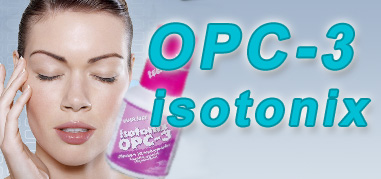
isotonix OPC-3 is a combination of plant-derived bioflavonoids, known as oligomeric proanthocyanidins, or OPC's. Made from a combination of grape seed, pine bark and red wine extracts (in addition to bilberry and citrus extracts), these OPC's are super-effective free radical neutralizers. Isotonix OPC-3 costs between $65.95 and $72.95 depending on the dealer, in most cases shipping is extra. Isotonix OPC-3 is a product marketed by Market America.isotonix OPC-3 - Value Size (90 Servings/Bottle) OPC-3 is a powerful combination of plant derived bioflavonoids, know as oligomeric proanthocyanidins (OPC's). It is made from a combination of grape seed, pine bark and red wine extracts in addition to bilberry and citrus extracts. These OPC's are super effective free radical neutralizers. They are not limited to being strong antioxidants, they are also crucial in their role in supporting the circulatory system and strengthening the capillaries. OPC-3 is a natural food supplement that should be taken for a lifetime.isotonix OPC-3 is a combination of plant-derived bioflavonoids, known as oligomeric proanthocyanidins, or OPC's. Made from a combination of grape seed, pine bark and red wine extracts (in addition to bilberry and citrus extracts), these OPC's are super-effective free radical neutralizers. Isotonix OPC-3 costs between $65.95 and $72.95 depending on the dealer, in most cases shipping is extra. Isotonix OPC-3 is a product marketed by Market America.isotonix OPC-3 - Value Size (90 Servings/Bottle) OPC-3 is a powerful combination of plant derived bioflavonoids, know as oligomeric proanthocyanidins (OPC's). It is made from a combination of grape seed, pine bark and red wine extracts in addition to bilberry and citrus extracts. These OPC's are super effective free radical neutralizers. They are not limited to being strong antioxidants, they are also crucial in their role in supporting the circulatory system and strengthening the capillaries. OPC-3 is a natural food supplement that should be taken for a lifetime.isotonix OPC-3 is a combination of plant-derived bioflavonoids, known as oligomeric proanthocyanidins, or OPC's. Made from a combination of grape seed, pine bark and red wine extracts (in addition to bilberry and citrus extracts), these OPC's are super-effective free radical neutralizers. Isotonix OPC-3 costs between $65.95 and $72.95 depending on the dealer, in most cases shipping is extra. Isotonix OPC-3 is a product marketed by Market America. |
| > More informations about HISTORY OF OPC-3 |
|
|
|
Grace opc |
|
 |
|
|
Opc ua |
|
 |
UA Post Office Box Numbers2 OPC RESPIRATORY/PULMONARY AHSC Out-Patient Clinic AHSC 245030. 3 OPC PEDIATRICS
AHSC Out-Patient ... FACILITIES MANAGEMENT UA USA Building CAMPUS 210300 ...2005 OPC技术研讨会在杭州举行-中国自动化网-新闻 - [ Translate this page ]The summary for this Chinese (Simplified) page contains characters that cannot be correctly displayed in this language/character set.SCADA SecurityResult: Some protocol efforts are underway such as Secure ICCP, Secure DNP3 and
OPC UA security. Also, PCSRF began work on a field device protection profile ... |
|
Grace opc |
|
 |
|
| > More informations about GRACE OPC |
|
| > More informations about
HISTORY OF OPC 3 |
some 400 years later, Professor Jacques Masquelier concluded that pine bark not only contained some vitamin C, but obviously was a good source of bioflavonoids, whose effects are similar to those of vitamin C. Further studies and research revealed that the pine bark contained an array of proanthocyanidins complexes. These compounds were also found in a variety of plants, including grape seeds, cranberries, peanut skin, lemon tree bark and citrus rinds. Masquelier termed the active ingredients of the pine bark "pycnogenols", which today are referred to in the scientific community as oligomeric proanthocyanidins, or OPCs.in 1534, French explorer Jacques Cartier was leading an expedition up the St. Lawrence River. Trapped by bad weather, Cartier and his crew were forced to survive on a ration of salted meat and biscuits. Cartier's crew began to suffer from severe deficiency of vitamin C and showed symptoms of scurvy. Many crewmembers died before the surviving members encountered a friendly Native American who saved most of their lives. He told them to make a tea from the bark and needles of the pine tree to cure their malady. They complied and, as a result, Cartier and many crewmembers survived.some 400 years later, Professor Jacques Masquelier concluded that pine bark not only contained some vitamin C, but obviously was a good source of bioflavonoids, whose effects are similar to those of vitamin C. Further studies and research revealed that the pine bark contained an array of proanthocyanidins complexes. These compounds were also found in a variety of plants, including grape seeds, cranberries, peanut skin, lemon tree bark and citrus rinds. Masquelier termed the active ingredients of the pine bark "pycnogenols", which today are referred to in the scientific community as oligomeric proanthocyanidins, or OPCs.in 1534, French explorer Jacques Cartier was leading an expedition up the St. Lawrence River. Trapped by bad weather, Cartier and his crew were forced to survive on a ration of salted meat and biscuits. Cartier's crew began to suffer from severe deficiency of vitamin C and showed symptoms of scurvy. Many crewmembers died before the surviving members encountered a friendly Native American who saved most of their lives. He told them to make a tea from the bark and needles of the pine tree to cure their malady. They complied and, as a result, Cartier and many crewmembers survived.some 400 years later, Professor Jacques Masquelier concluded that pine bark not only contained some vitamin C, but obviously was a good source of bioflavonoids, whose effects are similar to those of vitamin C. Further studies and research revealed that the pine bark contained an array of proanthocyanidins complexes. These compounds were also found in a variety of plants, including grape seeds, cranberries, peanut skin, lemon tree bark and citrus rinds. Masquelier termed the active ingredients of the pine bark "pycnogenols", which today are referred to in the scientific community as oligomeric proanthocyanidins, or OPCs. |
|