| > More informations about OPC TO |
|
| > More informations about
HISTORY OF OPC 3 |
in 1534, French explorer Jacques Cartier was leading an expedition up the St. Lawrence River. Trapped by bad weather, Cartier and his crew were forced to survive on a ration of salted meat and biscuits. Cartier's crew began to suffer from severe deficiency of vitamin C and showed symptoms of scurvy. Many crewmembers died before the surviving members encountered a friendly Native American who saved most of their lives. He told them to make a tea from the bark and needles of the pine tree to cure their malady. They complied and, as a result, Cartier and many crewmembers survived.some 400 years later, Professor Jacques Masquelier concluded that pine bark not only contained some vitamin C, but obviously was a good source of bioflavonoids, whose effects are similar to those of vitamin C. Further studies and research revealed that the pine bark contained an array of proanthocyanidins complexes. These compounds were also found in a variety of plants, including grape seeds, cranberries, peanut skin, lemon tree bark and citrus rinds. Masquelier termed the active ingredients of the pine bark "pycnogenols", which today are referred to in the scientific community as oligomeric proanthocyanidins, or OPCs.in 1534, French explorer Jacques Cartier was leading an expedition up the St. Lawrence River. Trapped by bad weather, Cartier and his crew were forced to survive on a ration of salted meat and biscuits. Cartier's crew began to suffer from severe deficiency of vitamin C and showed symptoms of scurvy. Many crewmembers died before the surviving members encountered a friendly Native American who saved most of their lives. He told them to make a tea from the bark and needles of the pine tree to cure their malady. They complied and, as a result, Cartier and many crewmembers survived.some 400 years later, Professor Jacques Masquelier concluded that pine bark not only contained some vitamin C, but obviously was a good source of bioflavonoids, whose effects are similar to those of vitamin C. Further studies and research revealed that the pine bark contained an array of proanthocyanidins complexes. These compounds were also found in a variety of plants, including grape seeds, cranberries, peanut skin, lemon tree bark and citrus rinds. Masquelier termed the active ingredients of the pine bark "pycnogenols", which today are referred to in the scientific community as oligomeric proanthocyanidins, or OPCs.in 1534, French explorer Jacques Cartier was leading an expedition up the St. Lawrence River. Trapped by bad weather, Cartier and his crew were forced to survive on a ration of salted meat and biscuits. Cartier's crew began to suffer from severe deficiency of vitamin C and showed symptoms of scurvy. Many crewmembers died before the surviving members encountered a friendly Native American who saved most of their lives. He told them to make a tea from the bark and needles of the pine tree to cure their malady. They complied and, as a result, Cartier and many crewmembers survived. |
|
Opc to |
|
 |
|
|
Opc antioxidant |
|
 |
OPC, as it's commonly called in scientific circles, is expert at treating vascular diseases because it actually increases the structural strength of weakened blood vessels. It also has other biological activity. OPC is one of the most potent antioxidants known -- fifty times as powerful as vitamin E, according to some tests. OPC's can help neutralize the underlying chemical cause (free radicals) that promotes most diseases.OPC's derived commercially from grape seeds and the bark of pine trees, is a mixture of antioxidant molecules, variously called proanthocyanidins, procyanidins, proanthocyanidolic oligomers (PCO) or Oligomeric Procyanthocyanidins (OPC).OPC, as it's commonly called in scientific circles, is expert at treating vascular diseases because it actually increases the structural strength of weakened blood vessels. It also has other biological activity. OPC is one of the most potent antioxidants known -- fifty times as powerful as vitamin E, according to some tests. OPC's can help neutralize the underlying chemical cause (free radicals) that promotes most diseases.  |
|
|
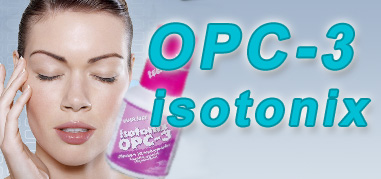
OPC TO |
office of Parliamentary Counsel - WelcomeThe Australian Government Office of Parliamentary Counsel (OPC) is responsible
for drafting Bills (which become Acts) for the Commonwealth Parliament.sEMATECH and Synopsys to Develop Advanced OPC Models For 45 nm and ...PhysOrg news: SEMATECH and Synopsys to Develop Advanced OPC Models For 45 nm and
Below Immersion Lithography.oPC Technology - The Code Project - COM/DCOM/COM+COM/OLE based technology for Process Control - An Overview. oPCOutsourced management and personnel for studies and operations for exploitation
and production facilities. Training. Based in Scotland.pNSN Webicorder Display... Southwest WA & OR · Spectrograms · Maps · USNSN · OFR OPC A04A TTW
LTY GNW LON WISH HOOD WIFE PIN EUO DBO webicorder image.the Sir Edmund Hillary Outdoor Pursuits Centre Of New ZealandWelcome to the Sir Edmund Hillary Outdoor Pursuits Centre of New Zealand. News ... The OPC vision is to provide education using outdoor pursuits to New Zealanders, particularly youth and those ... is still the bedrock of OPC the Centre has blossomed out into ... |
| > More informations about OPCXTRA |
|
| > More informations about
OPCXTRA |
oPC's are known to stabilize and protect collagen (a major protein in the body) from free radical damage and enzymatic digestion.oPCXtra is a super antioxidant drink mix made from a combination of six major sources of bioflavonoids. Four of the sources - Grape Seed Extract, Red Wine Extract, Pine Bark Extract and Green Tea Extract - supply a group of powerful antioxidant bioflavonoids called Oligomeric Proanthocyanidins (OPC).bioflavonoids are complex organic plant compounds found mostly in fruits and vegetables. They function as a cofactor or helper to the body's immune system to respond to inflammation, allergy and infection.oPCXtra is totally bioavailable, water soluble and delivered in an isotonic solution, the way nature intended it to be. This product is delivered to the small intestines within five minutes, when taken as directed.oPC's are known to stabilize and protect collagen (a major protein in the body) from free radical damage and enzymatic digestion. |
| > More informations about OPC TO |
|
|
Opc to |
|
 |
|
| > More informations about
INGREDIENTS |
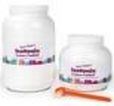
oPC 3 contains a combination of oligomeric proanthocyanidins (OPC's) from sources that include grape seed, red wine and pine bark† extracts. The grape seed extract is the superior source of OPCs, containing 92% of active ingredients over pine bark's 84% of active OPC ingredients.The red wine extract contains flavonoids called leucocyanidins from the skin of red grapes. Leucocyanidins are bioflavonoids with powerful antioxidant properties crucial to their role in supporting the circulatory system OPC 3 also contains bilberry and citrus extracts, which are known to have effects of vision and histamine release, respectively.this powerful formula will be delivered to your system the way nature intended it to be - in an isotonic solution that maximizes absorption. OPC 3 has a pleasant natural grape flavor, is a vegetarian product, and mixes instantly when added to water. This product should be taken on an empty stomach for the fastest, most effective delivery of the active ingredient.oPC 3 contains a combination of oligomeric proanthocyanidins (OPC's) from sources that include grape seed, red wine and pine bark† extracts. The grape seed extract is the superior source of OPCs, containing 92% of active ingredients over pine bark's 84% of active OPC ingredients.The red wine extract contains flavonoids called leucocyanidins from the skin of red grapes. Leucocyanidins are bioflavonoids with powerful antioxidant properties crucial to their role in supporting the circulatory system OPC 3 also contains bilberry and citrus extracts, which are known to have effects of vision and histamine release, respectively.this powerful formula will be delivered to your system the way nature intended it to be - in an isotonic solution that maximizes absorption. OPC 3 has a pleasant natural grape flavor, is a vegetarian product, and mixes instantly when added to water. This product should be taken on an empty stomach for the fastest, most effective delivery of the active ingredient.oPC 3 contains a combination of oligomeric proanthocyanidins (OPC's) from sources that include grape seed, red wine and pine bark† extracts. The grape seed extract is the superior source of OPCs, containing 92% of active ingredients over pine bark's 84% of active OPC ingredients.The red wine extract contains flavonoids called leucocyanidins from the skin of red grapes. Leucocyanidins are bioflavonoids with powerful antioxidant properties crucial to their role in supporting the circulatory system OPC 3 also contains bilberry and citrus extracts, which are known to have effects of vision and histamine release, respectively. |
|