|
Excel opc |
|
 |
|
|
Opc scout |
|
 |
Caving.UKLlethrid Swallet – Welsh Scout CCG Llygad Llwchwr – Teifi Valley CG Long Churn
Cave – Ghyll Head OPC Longwood/August – Mendip CG ...Amazon.de: Das OPC-Arbeitsbuch: Bücher - [ Translate this page ]Das OPC-Arbeitsbuch, Anne Simons. ... Trainer, Coach, Personal-Scout; Eine Empfehlung
wert: Eine Liste von maak-g, Naturheilforscher priv. ...OPC Foundation - Product DetailsOPC Custom Interface for Data Access 2.0 and for Alarms and Events 1.0.
OCX Data-Control. OPC Scout as a client with browsing interface ... |
| > More informations about EXCEL OPC |
|
| > More informations about
HISTORY OF OPC 3 |
some 400 years later, Professor Jacques Masquelier concluded that pine bark not only contained some vitamin C, but obviously was a good source of bioflavonoids, whose effects are similar to those of vitamin C. Further studies and research revealed that the pine bark contained an array of proanthocyanidins complexes. These compounds were also found in a variety of plants, including grape seeds, cranberries, peanut skin, lemon tree bark and citrus rinds. Masquelier termed the active ingredients of the pine bark "pycnogenols", which today are referred to in the scientific community as oligomeric proanthocyanidins, or OPCs.in 1534, French explorer Jacques Cartier was leading an expedition up the St. Lawrence River. Trapped by bad weather, Cartier and his crew were forced to survive on a ration of salted meat and biscuits. Cartier's crew began to suffer from severe deficiency of vitamin C and showed symptoms of scurvy. Many crewmembers died before the surviving members encountered a friendly Native American who saved most of their lives. He told them to make a tea from the bark and needles of the pine tree to cure their malady. They complied and, as a result, Cartier and many crewmembers survived.some 400 years later, Professor Jacques Masquelier concluded that pine bark not only contained some vitamin C, but obviously was a good source of bioflavonoids, whose effects are similar to those of vitamin C. Further studies and research revealed that the pine bark contained an array of proanthocyanidins complexes. These compounds were also found in a variety of plants, including grape seeds, cranberries, peanut skin, lemon tree bark and citrus rinds. Masquelier termed the active ingredients of the pine bark "pycnogenols", which today are referred to in the scientific community as oligomeric proanthocyanidins, or OPCs.in 1534, French explorer Jacques Cartier was leading an expedition up the St. Lawrence River. Trapped by bad weather, Cartier and his crew were forced to survive on a ration of salted meat and biscuits. Cartier's crew began to suffer from severe deficiency of vitamin C and showed symptoms of scurvy. Many crewmembers died before the surviving members encountered a friendly Native American who saved most of their lives. He told them to make a tea from the bark and needles of the pine tree to cure their malady. They complied and, as a result, Cartier and many crewmembers survived.some 400 years later, Professor Jacques Masquelier concluded that pine bark not only contained some vitamin C, but obviously was a good source of bioflavonoids, whose effects are similar to those of vitamin C. Further studies and research revealed that the pine bark contained an array of proanthocyanidins complexes. These compounds were also found in a variety of plants, including grape seeds, cranberries, peanut skin, lemon tree bark and citrus rinds. Masquelier termed the active ingredients of the pine bark "pycnogenols", which today are referred to in the scientific community as oligomeric proanthocyanidins, or OPCs. |
|
|
EXCEL OPC |
cogent RealTime Systems strengthens ties with SWD SoftwareThe combination lets industrial customers exhange data between QNX and virtually
any Windows program, such as Excel, OPC servers or OPC client programs. ...ueiDAQ FrameworkNET as well as Excel, OPC, MATLab, DASYLab, TestPoint, Agilent VEE, LabVIEW for
Windows, LabVIEW Realtime and LabWindows/CVI. ...trend Web Bird Seed DemoThe Canary Logger reads the Excel OPC Server and the data is written to the Canary
Labs Historian. The Trend Web Server uses the OPC HDA interface of the ... free OPC ClientsGreatly simplifies the task of importing live OPC data into Office applications (eg
Excel) and ODBC databases. Free time-limited download available for ...hach - Download Documentation - On-Line/Process System Software ...Hach OPC Excel Utility Tool, OPCExcel is a Microsoft Excel VBA macro utility that
demonstrates using OPC inside of an Excel spreadsheet. 831KB ...dCI Technologies Inc. OPC ServerYou can even bring the data live into MS Excel. ... Lookout and BridgeView:
- Microsoft Excel, Word, Access and VB: - Other OPC or DDE compliant software ... |
|
Excel opc |
|
 |
|
| > More informations about
INGREDIENTS |
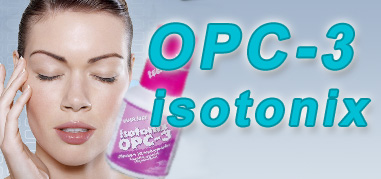
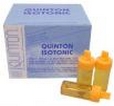
this powerful formula will be delivered to your system the way nature intended it to be - in an isotonic solution that maximizes absorption. OPC 3 has a pleasant natural grape flavor, is a vegetarian product, and mixes instantly when added to water. This product should be taken on an empty stomach for the fastest, most effective delivery of the active ingredient.oPC 3 contains a combination of oligomeric proanthocyanidins (OPC's) from sources that include grape seed, red wine and pine bark† extracts. The grape seed extract is the superior source of OPCs, containing 92% of active ingredients over pine bark's 84% of active OPC ingredients.The red wine extract contains flavonoids called leucocyanidins from the skin of red grapes. Leucocyanidins are bioflavonoids with powerful antioxidant properties crucial to their role in supporting the circulatory system OPC 3 also contains bilberry and citrus extracts, which are known to have effects of vision and histamine release, respectively.this powerful formula will be delivered to your system the way nature intended it to be - in an isotonic solution that maximizes absorption. OPC 3 has a pleasant natural grape flavor, is a vegetarian product, and mixes instantly when added to water. This product should be taken on an empty stomach for the fastest, most effective delivery of the active ingredient.oPC 3 contains a combination of oligomeric proanthocyanidins (OPC's) from sources that include grape seed, red wine and pine bark† extracts. The grape seed extract is the superior source of OPCs, containing 92% of active ingredients over pine bark's 84% of active OPC ingredients.The red wine extract contains flavonoids called leucocyanidins from the skin of red grapes. Leucocyanidins are bioflavonoids with powerful antioxidant properties crucial to their role in supporting the circulatory system OPC 3 also contains bilberry and citrus extracts, which are known to have effects of vision and histamine release, respectively.this powerful formula will be delivered to your system the way nature intended it to be - in an isotonic solution that maximizes absorption. OPC 3 has a pleasant natural grape flavor, is a vegetarian product, and mixes instantly when added to water. This product should be taken on an empty stomach for the fastest, most effective delivery of the active ingredient. |
| > More informations about PRODUCT DESCRIPTION |
|
| > More informations about
OPC ANTIOXIDANT |
oPC's derived commercially from grape seeds and the bark of pine trees, is a mixture of antioxidant molecules, variously called proanthocyanidins, procyanidins, proanthocyanidolic oligomers (PCO) or Oligomeric Procyanthocyanidins (OPC).oPC, as it's commonly called in scientific circles, is expert at treating vascular diseases because it actually increases the structural strength of weakened blood vessels. It also has other biological activity. OPC is one of the most potent antioxidants known -- fifty times as powerful as vitamin E, according to some tests. OPC's can help neutralize the underlying chemical cause (free radicals) that promotes most diseases.oPC's derived commercially from grape seeds and the bark of pine trees, is a mixture of antioxidant molecules, variously called proanthocyanidins, procyanidins, proanthocyanidolic oligomers (PCO) or Oligomeric Procyanthocyanidins (OPC).oPC, as it's commonly called in scientific circles, is expert at treating vascular diseases because it actually increases the structural strength of weakened blood vessels. It also has other biological activity. OPC is one of the most potent antioxidants known -- fifty times as powerful as vitamin E, according to some tests. OPC's can help neutralize the underlying chemical cause (free radicals) that promotes most diseases.oPC's derived commercially from grape seeds and the bark of pine trees, is a mixture of antioxidant molecules, variously called proanthocyanidins, procyanidins, proanthocyanidolic oligomers (PCO) or Oligomeric Procyanthocyanidins (OPC). |
|